Flat roofs are a popular choice for commercial buildings because they provide practical space for HVAC equipment, support efficient building layouts, and offer relatively accessible surfaces for professional maintenance. However, one of the most important factors affecting the performance of a commercial flat roof is its drainage system.
Unlike steeply sloped roofs, which naturally direct rainwater toward the edges, flat and low-slope roofing systems depend on carefully designed drainage components to move water away from the roof surface. When these systems become blocked, damaged, or improperly installed, standing water can accumulate and create problems that affect the entire building.
For commercial property owners in El Paso, Texas, roof drainage is particularly important during seasonal storms and sudden heavy rainfall. Although the region experiences extended dry periods, intense rain events can quickly expose drainage problems that may have gone unnoticed for months.
Understanding the causes of flat roof drainage problems, recognizing early warning signs, and investing in proper commercial roof maintenance can help protect your property, reduce unexpected repair expenses, and extend the service life of your roofing system.
Why Proper Drainage Is Essential for Commercial Flat Roofs
A commercial flat roof is not completely level. Most flat roofing systems are designed with a slight slope that directs rainwater toward drains, scuppers, gutters, or other designated drainage outlets.
This slope is essential because water that remains on the roof can place additional weight on the structure and increase exposure around seams, flashing, and other vulnerable roofing components. While roofing membranes are designed to resist moisture, they should not automatically be assumed to tolerate prolonged standing water under every condition.
Effective drainage allows rainfall to leave the roof at an appropriate rate, helping reduce unnecessary stress on the waterproofing system and supporting the overall performance of the building.
For commercial properties such as warehouses, office buildings, retail centers, and industrial facilities, poor roof drainage can create problems beyond the roofing system itself. Water intrusion may affect insulation, ceiling materials, electrical equipment, inventory, and occupied business spaces.
A properly functioning drainage system is therefore an important part of commercial property maintenance and long-term building protection.
What Causes Drainage Problems on Commercial Flat Roofs?
Flat roof drainage problems can develop for several reasons, ranging from routine debris accumulation to structural conditions that interfere with water movement.
Identifying the underlying cause is essential because cleaning a drain or repairing a membrane may provide only temporary relief if the roof has a more significant design or structural issue.
1. Clogged Roof Drains and Drainage Outlets
Blocked roof drains are among the most common causes of standing water on commercial roofing systems. Leaves, dirt, packaging materials, windblown debris, and other objects can accumulate around drainage openings, restricting the flow of rainwater.
In El Paso, seasonal winds and dust storms can contribute to debris accumulation on rooftops. Even buildings without nearby trees may experience drainage obstructions caused by windblown materials or debris left behind during rooftop maintenance activities.
When a drain becomes partially or completely blocked, water may collect around the opening instead of flowing through the drainage system. During heavy rainfall, this accumulation can expand across larger sections of the roof.
Routine inspections and professional drain cleaning can help identify obstructions before they create significant water buildup.
2. Insufficient Roof Slope
Although commercial flat roofs appear level from the ground, they generally require a designed slope to move water toward appropriate drainage points.
When a roof has insufficient slope, rainwater may collect in low areas rather than flowing toward drains or scuppers. These conditions can result from original design deficiencies, installation problems, or changes to the roof surface over time.
Some roofing systems use tapered insulation to establish the required slope without significantly altering the underlying structure. However, the appropriate drainage design depends on the roofing materials, roof configuration, and applicable building requirements.
If standing water repeatedly appears in the same locations, a roofing professional may need to evaluate whether the slope is adequate or whether corrective drainage improvements are necessary.
3. Damaged or Deteriorating Roofing Membranes
Commercial flat roofing systems often use waterproof membranes designed to protect the building from moisture intrusion. Common materials include TPO, EPDM, PVC, and modified bitumen roofing systems.
Over time, these materials may experience damage from weather exposure, foot traffic, rooftop equipment, or improper maintenance. Punctures, damaged seams, deteriorated flashing, and other defects can create potential pathways for water intrusion.
When water remains on the roof for extended periods, existing membrane vulnerabilities may become more problematic. However, standing water does not automatically indicate that the membrane has failed.
A professional commercial roof inspection can help determine whether drainage issues are contributing to membrane deterioration or whether repairs are needed in specific areas.
4. Sagging Roof Decking or Structural Deflection
In some commercial buildings, persistent water accumulation may result from structural conditions rather than blocked drainage components.
Roof decking and supporting structural members can experience deflection under loads. If the roof develops low spots, water may collect in those areas instead of reaching the intended drainage outlets.
As water accumulates, it adds weight to the roofing system. In severe situations, this additional load may worsen existing deflection and contribute to further water accumulation.
Because these conditions may involve structural safety concerns, visible sagging, significant water accumulation, or suspected structural deterioration should be evaluated promptly by qualified professionals. A structural engineer may be necessary to assess the roof’s load capacity and determine appropriate corrective measures.
5. Poorly Positioned or Inadequate Drainage Components
A commercial roof drainage system must be designed to accommodate the roof’s size, configuration, and expected rainfall conditions.
If drains are poorly positioned, undersized, or located away from actual low points, water may not leave the roof efficiently. Similarly, improperly installed scuppers or gutters can restrict drainage during storms.
Some commercial roofs also require secondary drainage systems that provide an emergency outlet if the primary drainage system becomes obstructed.
The requirements for these systems depend on the roof design and applicable building codes. A qualified commercial roofing professional can help identify potential deficiencies and coordinate with plumbing or design professionals when necessary.
What Is Ponding Water on a Flat Roof?
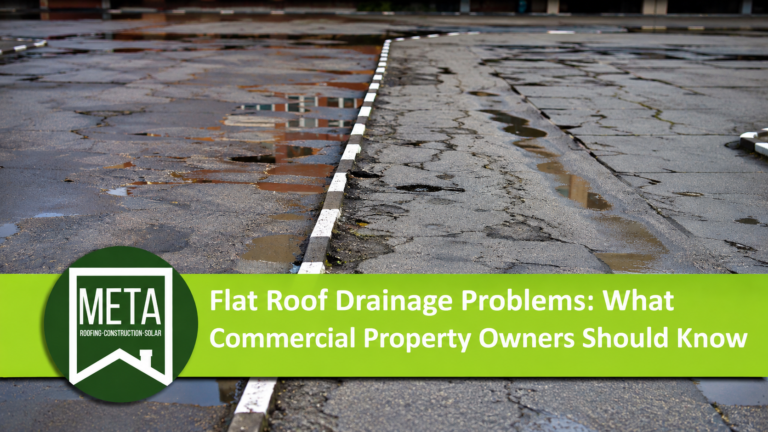
Ponding water refers to rainwater or other accumulated water that remains on a roof surface instead of draining away within a reasonable period.
Short-term water accumulation can occur during and immediately after rainfall, even on properly designed roofing systems. However, water that remains for an extended period may indicate inadequate drainage or other roof conditions requiring attention.
The National Roofing Contractors Association identifies ponding water remaining beyond approximately 48 hours as potentially detrimental to certain roof assemblies. This is a commonly referenced industry guideline, although the specific performance requirements depend on the roofing system and manufacturer. National Roofing Contractors Association+1
Why Is Standing Water a Concern?
Persistent standing water can create additional stress on roofing materials and increase the consequences of existing waterproofing defects. If water enters through damaged seams, penetrations, or flashing, it may reach insulation and other components beneath the membrane.
Water accumulation also adds weight to the roof. On a large commercial building, even a relatively shallow layer of standing water can represent a significant additional load.
The presence of ponding water does not necessarily mean a roof is structurally unsafe or requires complete replacement. However, repeated accumulation should be investigated to determine why drainage is not functioning as intended.
Warning Signs of Flat Roof Drainage Problems
Commercial roof drainage issues are not always visible from inside a building. In many cases, the first warning signs appear on the roof surface or near drainage outlets.
Property owners and facility managers should pay attention to changes in roof performance, particularly after heavy rainfall.
Persistent Standing Water After Rainfall
One of the clearest warning signs is water remaining in the same areas long after a storm has ended.
If puddles repeatedly develop around drains, rooftop equipment, or low sections of the membrane, the roof may have slope, drainage, or structural problems that require evaluation.
Photographs taken from authorized, safe inspection locations can help document recurring patterns and provide useful information to roofing professionals.
Water Stains and Interior Ceiling Damage
Discoloration on ceilings, damp insulation, peeling paint, and other moisture-related symptoms may indicate that water has entered the roofing assembly.
Commercial roof leaks can be difficult to trace because water may travel along decking, structural members, or concealed building components before becoming visible inside.
A water stain directly below a roof drain does not necessarily mean the drain itself is defective. Professional evaluation is needed to identify the actual source of intrusion.
Damaged Flashing Around Roof Drains
Roof drains and scuppers require properly installed waterproofing connections where they meet the roofing membrane.
If flashing becomes damaged, loose, or improperly sealed, water may enter beneath the roof surface. These connections are particularly important because water naturally flows toward drainage openings.
Regular inspection of drain assemblies and surrounding membrane conditions can help identify potential failures before they become more extensive.
Debris Accumulation Near Drains and Scuppers
Visible debris around drainage openings may indicate that rainwater cannot flow efficiently through the system.
Leaves, dust, loose roofing materials, and other objects can accumulate near strainers and outlets. Wind exposure may cause debris to shift repeatedly, allowing a drain to function normally one day and become obstructed during the next storm.
Professional maintenance should include inspecting drainage openings and removing materials that could restrict water movement.
Uneven or Depressed Roof Areas
Low spots, visible depressions, or changes in the roof surface may indicate problems with the roofing assembly or supporting structure.
These conditions can be associated with compressed insulation, deteriorated decking, installation deficiencies, or structural deflection.
Because the causes vary, corrective work should be based on a professional assessment rather than simply adding roofing material to the affected area.
How Poor Drainage Can Damage a Commercial Roofing System
When drainage problems continue without correction, they can affect several parts of a commercial roofing assembly. The severity depends on the roofing materials, the amount of accumulated water, the condition of the structure, and how long the problem persists.
Increased Risk of Roof Leaks
Standing water can increase the consequences of existing openings or defects in a roofing membrane.
If flashing, seams, or penetrations have already deteriorated, prolonged water exposure may allow moisture to enter the roofing system. Once water reaches the insulation or decking, the damage may extend beyond the original entry point.
Commercial roof leak repair should therefore address both the waterproofing defect and any drainage conditions contributing to the problem.
Deterioration of Roofing Insulation
Roof insulation helps regulate heat transfer between the exterior roofing system and the building interior.
When certain insulation materials become wet, their thermal performance may be reduced. Moisture can also contribute to deterioration of adjacent components and create conditions that require removal or replacement of affected materials.
For commercial property owners in El Paso, compromised roof insulation can be particularly concerning because cooling demands are often significant during the summer.
Professional moisture evaluation can help determine whether insulation has been affected and what corrective measures are necessary.
Additional Structural Loads
Water is heavy, and accumulated rainwater adds substantial weight to a roof.
As an illustration, one inch of standing water weighs approximately 5.2 pounds per square foot. Across a large roof area, this can create a considerable additional load.
Commercial roof structures are designed for specified loads, but blocked drains or unanticipated water accumulation may create conditions that exceed intended performance limits.
Significant ponding, visible structural deflection, or unusual cracking should be treated as potential safety concerns. Property owners should restrict access to affected areas and arrange prompt professional evaluation.
Interior Property Damage and Business Disruptions
Water intrusion can affect more than the roofing materials themselves. In commercial buildings, leaks may damage ceiling systems, electrical components, inventory, office equipment, and interior finishes.
Depending on the building’s use, water damage may interrupt normal operations or require temporary restrictions in affected areas.
For warehouses, retail spaces, restaurants, and office buildings, maintaining roof drainage is an important part of protecting business continuity and reducing unexpected repair expenses.
How Commercial Flat Roof Drainage Systems Work
Commercial buildings use different drainage systems depending on roof configuration, building size, and structural design.
Understanding these systems can help property owners recognize their maintenance needs and identify when professional assistance is appropriate.
Internal Roof Drains
Internal roof drains are commonly installed at designated low points on commercial flat roofs. They collect rainwater and direct it into piping systems that carry water away from the building.
These systems can be effective for large roof areas, but they require properly sized piping, clear drain openings, and watertight connections.
Drain strainers help prevent larger debris from entering the piping system, although they do not eliminate the need for routine cleaning and inspection.
Roof Scuppers
Scuppers are openings located through parapet walls or along roof edges that allow water to leave the roof.
Depending on the roof design, scuppers may serve as primary drainage outlets or secondary overflow components.
Their performance depends on proper placement, sufficient capacity, and correctly installed waterproofing details.
Damaged flashing around a scupper can create a leak even when water is otherwise draining normally.
Gutters and Downspouts
Some commercial flat and low-slope roofs direct water toward exterior gutters and downspouts.
These components collect runoff and transport it away from the building, helping protect exterior walls and surrounding areas from uncontrolled water discharge.
Blocked gutters, damaged downspouts, or poor discharge placement can create drainage problems even when the roof surface itself has adequate slope.
Secondary and Emergency Overflow Drainage
Secondary drainage systems provide an alternative path for water when primary roof drains become blocked or cannot remove water quickly enough.
Depending on the building and applicable code requirements, these systems may include overflow drains or scuppers positioned to limit excessive water accumulation.
Emergency overflow drainage is particularly important for roofs surrounded by parapet walls, where water may otherwise become trapped.
The International Building Code and International Plumbing Code include provisions addressing secondary roof drainage in applicable building designs. Actual requirements depend on the locally adopted codes and the property’s configuration. IIBEC+1
Why Flat Roof Drainage Matters During El Paso’s Monsoon Season
El Paso’s desert climate can create a false sense of security when it comes to commercial roof drainage.
During extended dry periods, blocked drains, deteriorated flashing, and low areas may not produce obvious symptoms. As a result, property owners may be unaware of drainage deficiencies until heavy rainfall occurs.
The summer monsoon season can bring sudden storms that generate significant runoff over relatively short periods. When commercial roof drains are obstructed or the drainage system is inadequate, water may accumulate faster than it can leave the roof.
Seasonal winds can also deposit dust and debris near drainage openings. Without routine maintenance, these materials may contribute to blockages during subsequent rainfall.
For commercial property owners in El Paso, preventive roof inspections before periods of increased storm activity can help identify drainage concerns and reduce the risk of unexpected water intrusion.
How to Fix Flat Roof Drainage Problems
The appropriate solution for a drainage problem depends on its cause. Some issues can be addressed through routine maintenance, while others require modifications to the roofing system or structural evaluation.
A professional commercial roofing inspection is the best starting point for determining which repairs are necessary.
Cleaning and Maintaining Roof Drains
If standing water results from debris accumulation, professional cleaning may restore the intended flow of rainwater.
Maintenance may involve removing debris from drain strainers, inspecting accessible drainage openings, and verifying that water can move through the system.
If the blockage is located within drainage piping, a qualified plumbing or drainage professional may be needed.
Cleaning should be performed using methods appropriate for the roofing membrane to avoid punctures or other damage.
Repairing Damaged Roofing Membranes and Flashing
When drainage problems are accompanied by roof leaks, the contractor should inspect surrounding membrane seams, flashing, and drainage connections.
Damaged components may require localized repairs, replacement, or reconstruction of waterproofing details.
Applying additional sealant without identifying the cause of the problem may provide only temporary relief.
Proper commercial roof repairs should address the actual source of water intrusion and ensure that the repaired components remain compatible with the existing roofing system.
Improving Roof Slope With Tapered Insulation
When ponding water results from insufficient slope, a roofing professional may recommend a tapered insulation system as part of a roof restoration or replacement project.
Tapered insulation uses panels of varying thicknesses to create a slope that directs water toward designated drains or scuppers.
This approach can improve drainage without necessarily requiring major modifications to the primary roof structure.
However, tapered insulation must be designed for the specific roof configuration and coordinated with drainage locations, rooftop equipment, and other building components.
Repairing or Replacing Drainage Components
Damaged drains, poorly positioned scuppers, and inadequate drainage piping may require repair or replacement.
In some cases, correcting the problem involves replacing deteriorated drain assemblies or improving waterproofing connections. More complex projects may require redesigning portions of the drainage system.
Changes affecting drainage capacity, structural loading, or code compliance should be evaluated by appropriately qualified professionals.
Addressing Structural Problems
If standing water results from roof deck deterioration or structural deflection, ordinary membrane repairs may not be sufficient.
The underlying structure must be evaluated to determine whether reinforcement, repair, or other corrective work is necessary.
Structural issues should be addressed before installing new roofing materials because continued deflection can recreate drainage problems and affect the performance of the replacement system.
Can Flat Roof Drainage Problems Be Prevented?
Although drainage systems can develop problems over time, preventive maintenance can help reduce the likelihood of recurring water accumulation.
Commercial property owners should establish a maintenance plan that accounts for the roof’s age, materials, drainage design, and exposure to local weather conditions.
A practical preventive maintenance program may include:
- Scheduling professional commercial roof inspections at appropriate intervals.
- Checking drains, scuppers, and gutters before periods of heavy rainfall.
- Removing debris that could obstruct drainage openings.
- Inspecting membrane seams and flashing around drainage components.
- Monitoring areas where standing water has previously developed.
- Documenting roof repairs, inspections, and recurring drainage problems.
- Arranging additional evaluations after significant storms.
Routine maintenance does not eliminate every potential roofing issue, but it can help identify developing problems before they require extensive repairs.
How Often Should Commercial Flat Roofs Be Inspected?
Inspection frequency depends on the roofing system, manufacturer requirements, building use, and environmental conditions.
Many commercial property maintenance programs include professional roof inspections at least twice a year, often during spring and fall. Additional evaluations may be appropriate after severe weather or when signs of drainage problems appear.
For commercial properties in El Paso, inspecting drainage systems before the summer monsoon season can be especially useful. This provides an opportunity to identify debris accumulation, damaged components, and existing ponding areas before heavy rainfall exposes the problem.
Buildings with significant rooftop equipment, recurring drainage issues, or older roofing materials may require more frequent attention.
Property owners should also review any maintenance obligations included in their roofing warranty, as certain agreements establish specific inspection or documentation requirements.
Should You Repair or Replace a Commercial Flat Roof With Drainage Problems?
Not every drainage problem requires replacing the entire roofing system.
If the roof membrane remains in good condition and water accumulation results from a blocked drain or localized flashing issue, targeted maintenance or repairs may restore proper drainage.
However, more extensive work may be necessary when drainage deficiencies are associated with widespread membrane deterioration, saturated insulation, recurring leaks, or significant slope problems.
A complete commercial roof replacement may also provide an opportunity to redesign drainage components, improve insulation, and select materials better suited to the building’s requirements.
The decision should be based on the overall condition of the roofing assembly, the extent of the drainage problem, projected repair costs, and the expected remaining service life.
An experienced commercial roofing contractor can help property owners compare available solutions and determine whether repair, restoration, or replacement is the most appropriate approach.
The Importance of Professional Commercial Roof Inspections
Commercial roofing systems are complex assemblies that require specialized knowledge to evaluate properly.
Drainage problems may involve waterproofing materials, plumbing components, structural conditions, or multiple issues occurring simultaneously. Identifying the correct cause is essential for avoiding unnecessary repairs and preventing recurring damage.
A professional commercial roof inspection may include examining drainage outlets, evaluating visible slope conditions, checking membrane seams, inspecting flashing, and identifying evidence of previous water accumulation.
When necessary, roofing professionals may recommend additional moisture testing, drainage evaluation, or structural assessment to better understand concealed problems.
For commercial property owners, a thorough inspection provides valuable information about the roof’s current condition and helps support more informed maintenance decisions.
Protect Your Commercial Property With META Roofing in El Paso, TX
Flat roof drainage problems can develop gradually, but their consequences may become apparent during a single heavy rainstorm. Blocked drains, inadequate slope, damaged membranes, and structural conditions can all interfere with proper water movement and increase the risk of costly commercial roofing problems.
At META Roofing, we understand the challenges that El Paso’s weather conditions present for commercial roofing systems. Our team helps property owners evaluate roof damage, identify maintenance concerns, and explore solutions for commercial roof repairs and replacements.
Whether you manage an office building, warehouse, retail property, or another commercial facility, maintaining your roofing system is an important part of protecting your investment and supporting daily business operations.
If you’ve noticed standing water, recurring roof leaks, or other drainage concerns, professional evaluation can help determine the underlying cause and identify appropriate next steps.
Contact META Roofing today to learn more about our commercial roofing services and schedule a professional roof evaluation in El Paso, Texas.
Frequently Asked Questions About Commercial Flat Roof Drainage
Is It Normal for Water to Sit on a Flat Roof?
Some temporary water accumulation can occur during and shortly after rainfall. However, water that remains on the roof for more than approximately 48 hours may indicate a drainage problem requiring evaluation. The significance depends on the roofing system, manufacturer requirements, and roof design. Persistent ponding should not be ignored, particularly when it repeatedly occurs in the same location.
How Long Should It Take for a Commercial Flat Roof to Drain?
A properly designed flat roof should direct rainfall toward drainage outlets without allowing excessive accumulation. Although drainage time varies depending on the roofing system and weather conditions, industry guidance commonly identifies water remaining beyond 48 hours as a potential concern. A roofing professional can determine whether observed ponding indicates a design, maintenance, or structural problem.
Can Standing Water Cause a Commercial Roof to Leak?
Standing water can increase the consequences of existing roofing defects, particularly around damaged seams, flashing, and penetrations. However, a properly designed and intact roofing membrane may tolerate temporary water exposure without leaking. Persistent ponding should still be investigated because prolonged accumulation may contribute to deterioration or reveal underlying drainage deficiencies.
What Causes Water to Pool Around Roof Drains?
Water may collect around roof drains because of debris accumulation, blocked piping, inadequate slope, damaged drainage components, or depressions in the roofing surface. In some cases, the drain itself may function correctly while surrounding low spots prevent water from reaching it. A professional inspection can help identify the specific cause and determine the necessary repairs.
Can Poor Roof Drainage Damage a Commercial Building’s Structure?
Yes. Accumulated water adds weight to the roofing system and may create excessive loads under certain conditions. If structural members are already deteriorated or experiencing significant deflection, additional water accumulation can increase the risk of damage. Serious ponding or visible structural movement should be evaluated promptly by qualified professionals.
How Often Should Commercial Roof Drains Be Cleaned?
Cleaning frequency depends on environmental conditions, nearby vegetation, roof configuration, and the amount of debris that collects on the property. Commercial drainage systems should be inspected regularly and before expected periods of heavy rainfall. Buildings exposed to frequent windblown debris may require more frequent cleaning to maintain clear drainage openings.
Does a Commercial Flat Roof Need Emergency Overflow Drains?
Some commercial roof designs require secondary drainage systems to prevent excessive water accumulation if primary drains become blocked. These systems may use emergency overflow drains or scuppers, depending on the building configuration and applicable codes. A qualified roofing or design professional can determine which requirements apply to a particular property.
Can Flat Roof Drainage Problems Be Fixed Without Replacing the Entire Roof?
Yes. Many drainage problems can be corrected through drain cleaning, localized membrane repairs, flashing replacement, or improvements to drainage components. However, widespread deterioration, inadequate slope, saturated insulation, or structural damage may require more extensive work. The most appropriate solution depends on the roofing system’s overall condition.
Why Is My Commercial Roof Leaking Only During Heavy Rain?
Some drainage deficiencies become apparent only when rainfall exceeds the system’s effective capacity. Blocked drains, inadequate slope, or water accumulation around damaged flashing may allow moisture intrusion during intense storms while remaining unnoticed during light rainfall. A professional inspection can help determine whether the leak is related to drainage or another roofing problem.
Can Drainage Problems Affect My Commercial Roof Warranty?
Certain commercial roofing warranties include maintenance requirements and exclusions related to drainage deficiencies, ponding water, or damage caused by neglected maintenance. Coverage varies depending on the manufacturer and warranty agreement. Property owners should review the applicable terms and maintain documentation of roof inspections, drainage cleaning, and completed repairs.